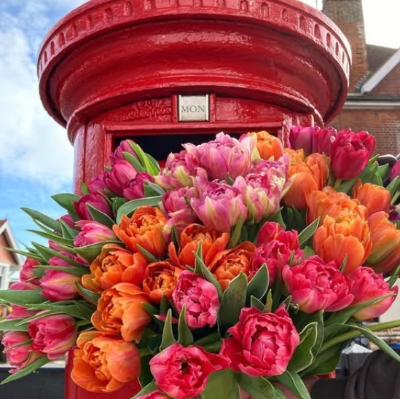
The Pin in Tulips: Tradition, Experience… and What’s Really Going On
If you’ve been buying and arranging tulips for years, you may well have been told — or discovered for yourself — that putting a small pin in the stem helps stop them drooping.
For many people, it seems to work.
And when something has been done successfully for decades, it deserves a bit of respect.
So let’s talk about what’s really happening — without dismissing tradition or experience.
Why the Pin Trick Became So Popular
Tulips are unusual flowers. Even after they’re cut, they continue to grow, stretch and change in the vase. Anyone who’s lived with them will know they can look upright one day and dramatically relaxed the next.
Over time, people naturally experimented. A pin here, a tweak there — and sometimes the flowers appeared to behave better afterwards. That observation stuck, and the advice was passed on.
And to be fair, in some situations, it seems to genuinely help.
What the Science Tells Us
From a technical point of view, tulip stems are already hollow and perfectly capable of moving water on their own. There isn’t trapped air inside the stem that needs releasing, and piercing it doesn’t improve water uptake.
What it does do is create a small wound in the stem. In controlled conditions, that can allow bacteria in and shorten vase life — which is why florists are generally advised not to recommend it.
So Why Does It Sometimes Feel Like It Works?
This is the interesting bit.
When people pin a tulip, they’re often doing several other helpful things at the same time — even without realising it:
-
Recutting the stems
-
Changing the water
-
Moving the vase to a cooler spot
-
Adjusting the water level
-
Giving the flowers a bit more attention
Any one of those can temporarily improve how tulips look and behave.
So while the pin itself isn’t the reason, the moment of care around it can make a noticeable difference — which is why the belief has lasted so long.
The Real Reason Tulips Droop
Tulips bend mainly because of age and growth.
They:
-
Continue growing after being cut
-
Develop soft, fresh growth near the flower head
-
Lose structural strength as they mature
If that new growth doesn’t get quite enough water or support, the stem naturally curves. It’s a sign of a flower that’s changing, not failing.
Freshness Matters More Than Any Trick
In our experience, the biggest factor in whether tulips stand tall is how fresh they are when they reach the vase.
Tulips that have spent longer:
-
In boxes
-
In cold storage
-
Sitting dry
-
Waiting to be sold
They can still look beautiful initially, but they won’t have the same underlying strength as fresher stems. That’s exactly why, at Grand Flowers, we prioritise a swift supply chain — so our flowers spend less time waiting and more time thriving in your vase.
A Gentle, Honest Conclusion
If you’ve used the pin trick for years and feel it helps, there’s no judgement here — habits like that are part of how flower care has been passed down.
But if we’re being honest, the real key to upright, long-lasting tulips isn’t a pin.
It’s freshness, careful handling, cool conditions and clean water.
Those are the quiet things that make the biggest difference — and always have.
Tulip Bouquet – buy online or call 01323 736968